
If you've been staring at the same scraggly foundation shrubs since you moved in — or you're finally ready to transform that flat, featureless backyard into something your family actually uses — this guide is for you. Hamilton County landscape design is a unique discipline. Our clay-heavy soils, wide temperature swings, and competitive residential neighborhoods mean that a generic landscaping approach rarely delivers lasting results. What works in a Phoenix subdivision or a coastal Connecticut cottage needs to be completely rethought for Westfield, Noblesville, Fishers, and Carmel.
At Hope Grows Indy, we design and maintain landscapes across Hamilton County every single season. This guide distills what we've learned — from soil prep to plant selection, from defining outdoor living zones to maximizing curb appeal ROI — into a practical, step-by-step framework any homeowner can use, whether you're working with a professional or tackling a phased DIY plan.
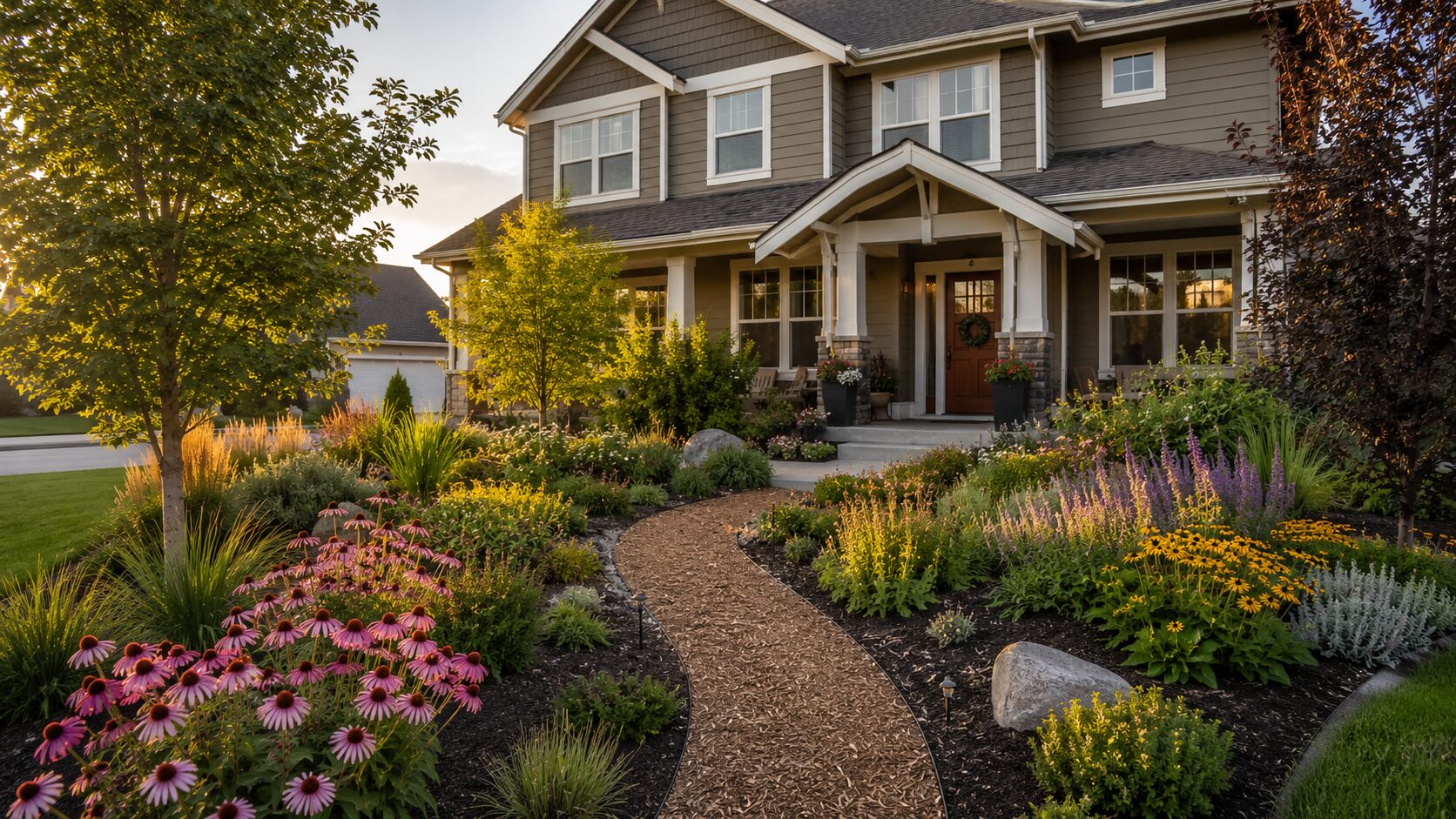
Why Landscape Design in Hamilton County Requires a Local Approach
Hamilton County isn't just a suburban extension of Indianapolis — it's a distinct microclimate and soil environment that punishes landscaping decisions borrowed from national design trends. Before choosing a single plant or drawing a single bed line, you need to understand three local realities.
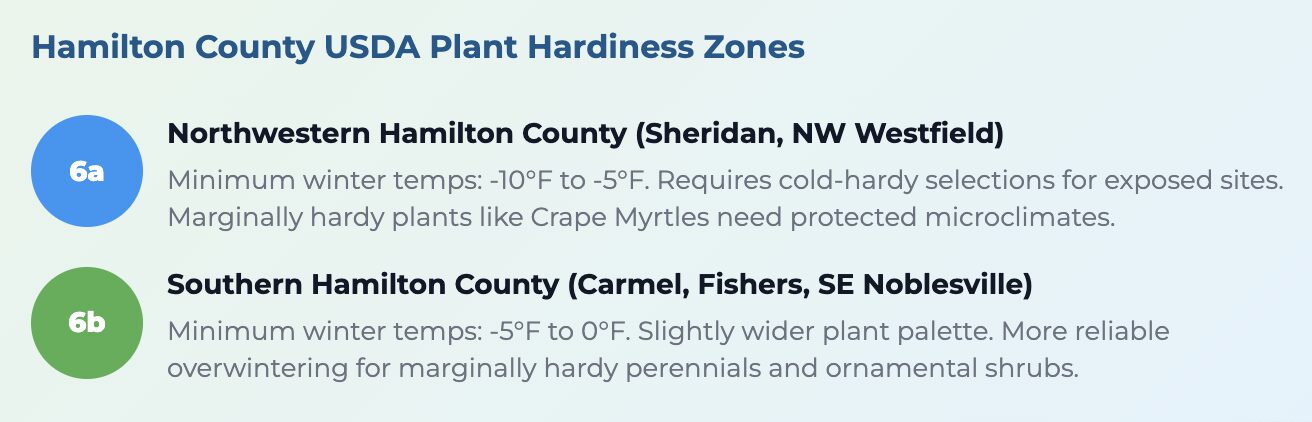
USDA Hardiness Zone: 6a and 6b
The Hamilton County Clay Problem
The majority of Hamilton County sits on glacial till — dense, poorly-drained clay soil left behind by the Wisconsin Glacier. This creates two compounding challenges for landscape design: waterlogging in spring and concrete-like compaction in summer drought. Both conditions kill plants that aren't selected with this reality in mind.
Firsthand Guidance
On every new planting bed we install in Hamilton County, we amend the top 8–12 inches of soil with a 3-to-1 mix of aged compost and coarse horticultural sand before any plant goes in the ground. We also grade beds with a slight crown — raising the center 2–3 inches above the surrounding grade — to force water away from root crowns. Skipping this step is the #1 reason new landscaping fails in this county.
Homeowner Association Considerations
A significant portion of Hamilton County's residential developments — including neighborhoods in Carmel, Fishers, and Westfield — are governed by HOAs with landscape standards. Before investing in any major design change, pull your Declaration of Covenants and note restrictions on: fence heights and materials, landscape bed placement relative to property lines, percentage of lot that can be mulched, approved plant lists (some HOAs restrict invasive species and mandate specific tree canopy coverage), and exterior structure placement for patios, pergolas, and retaining walls.
Pro Tip: In Hamilton County's newer developments (2015+), many HOA landscape standards were written with sustainability in mind. Native plant gardens and pollinator beds are increasingly approved — and sometimes incentivized. Always ask before assuming a formal, traditional design is required.
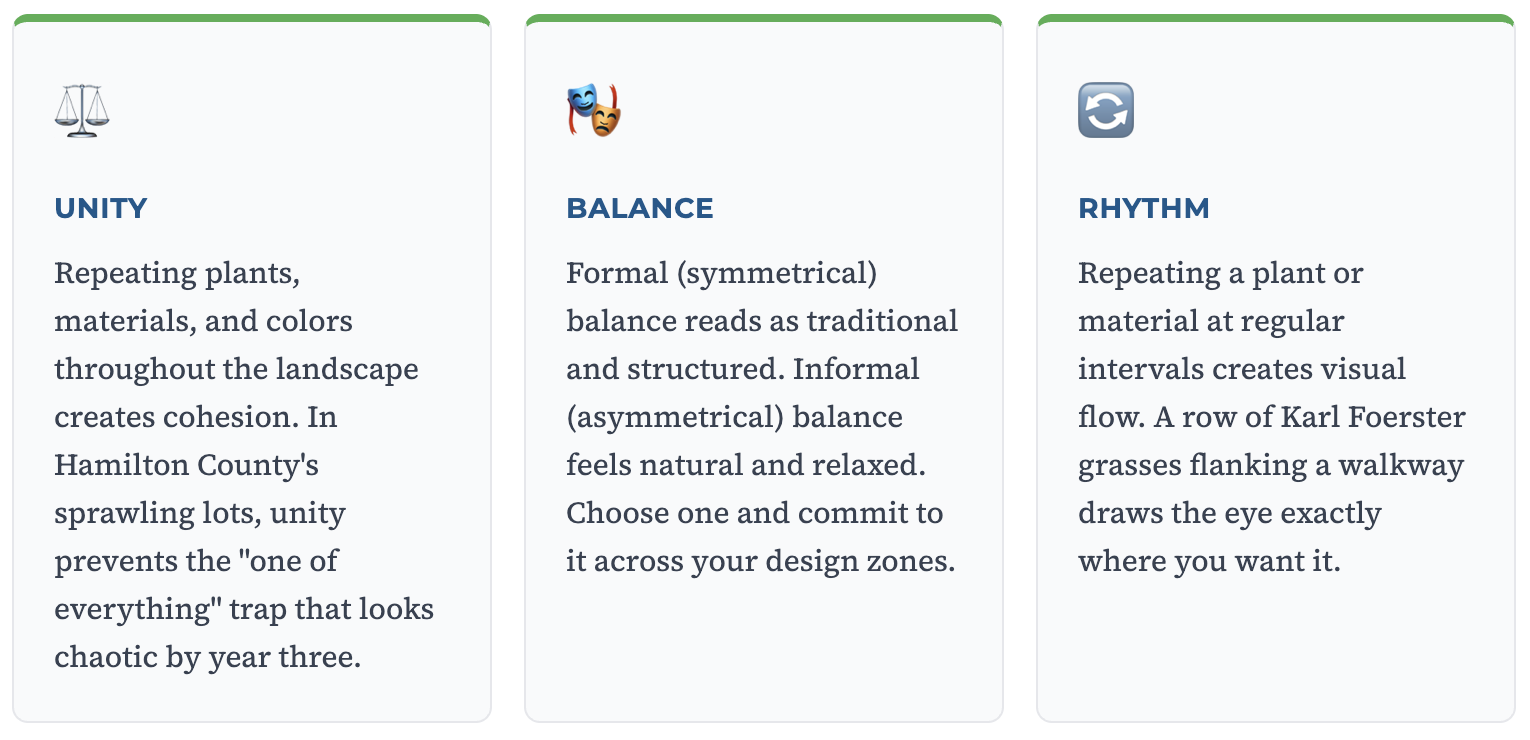
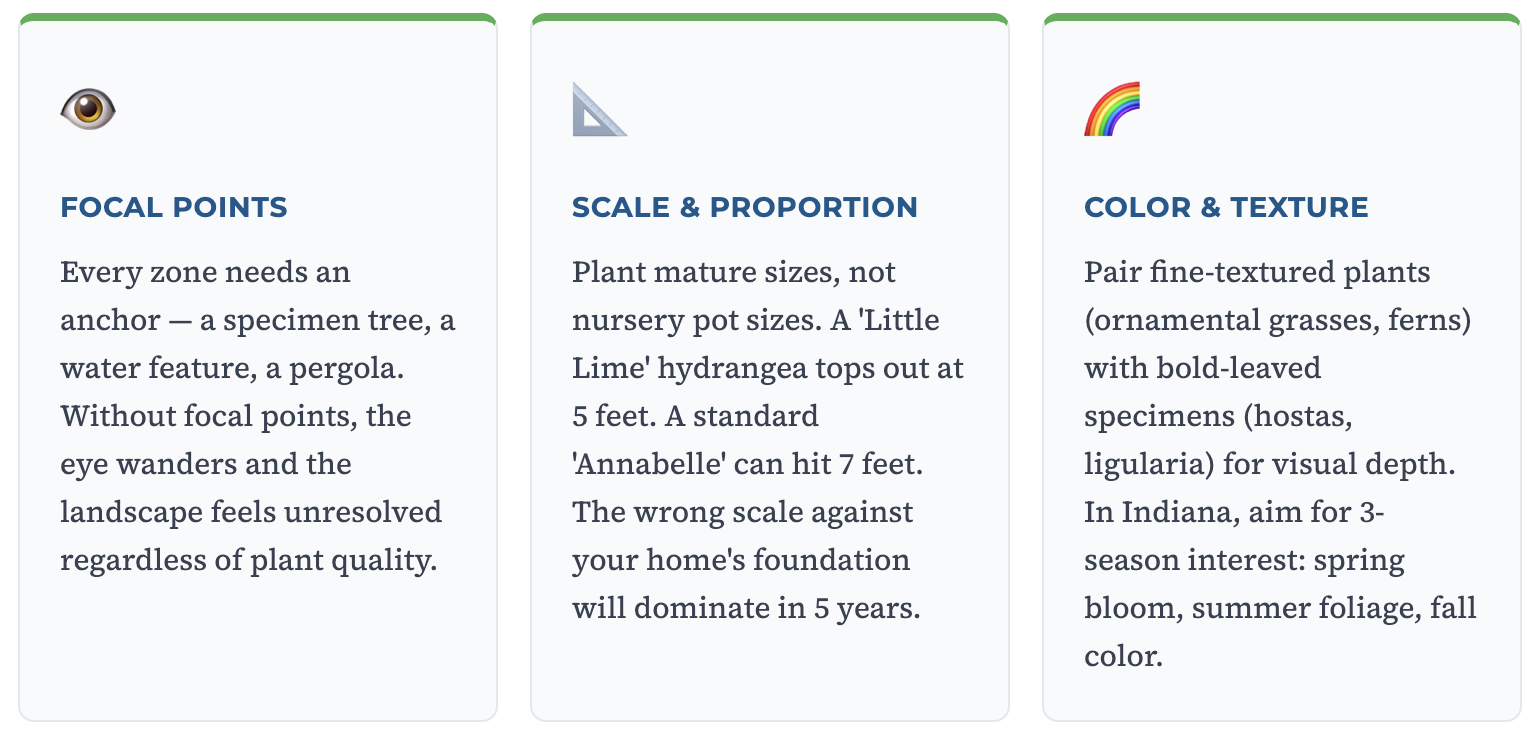
The 6 Core Landscape Design Principles Every Hamilton County Homeowner Should Know
Great landscape design isn't accidental. Whether your aesthetic runs toward formal symmetry, naturalistic cottage gardens, or clean modern minimalism, every successful residential landscape is governed by the same six principles. Understanding them is what separates a yard that photographs beautifully on Day 1 from one that improves and matures gracefully over five to ten years.
How to Plan Your Landscape Design: A Phase-by-Phase Approach
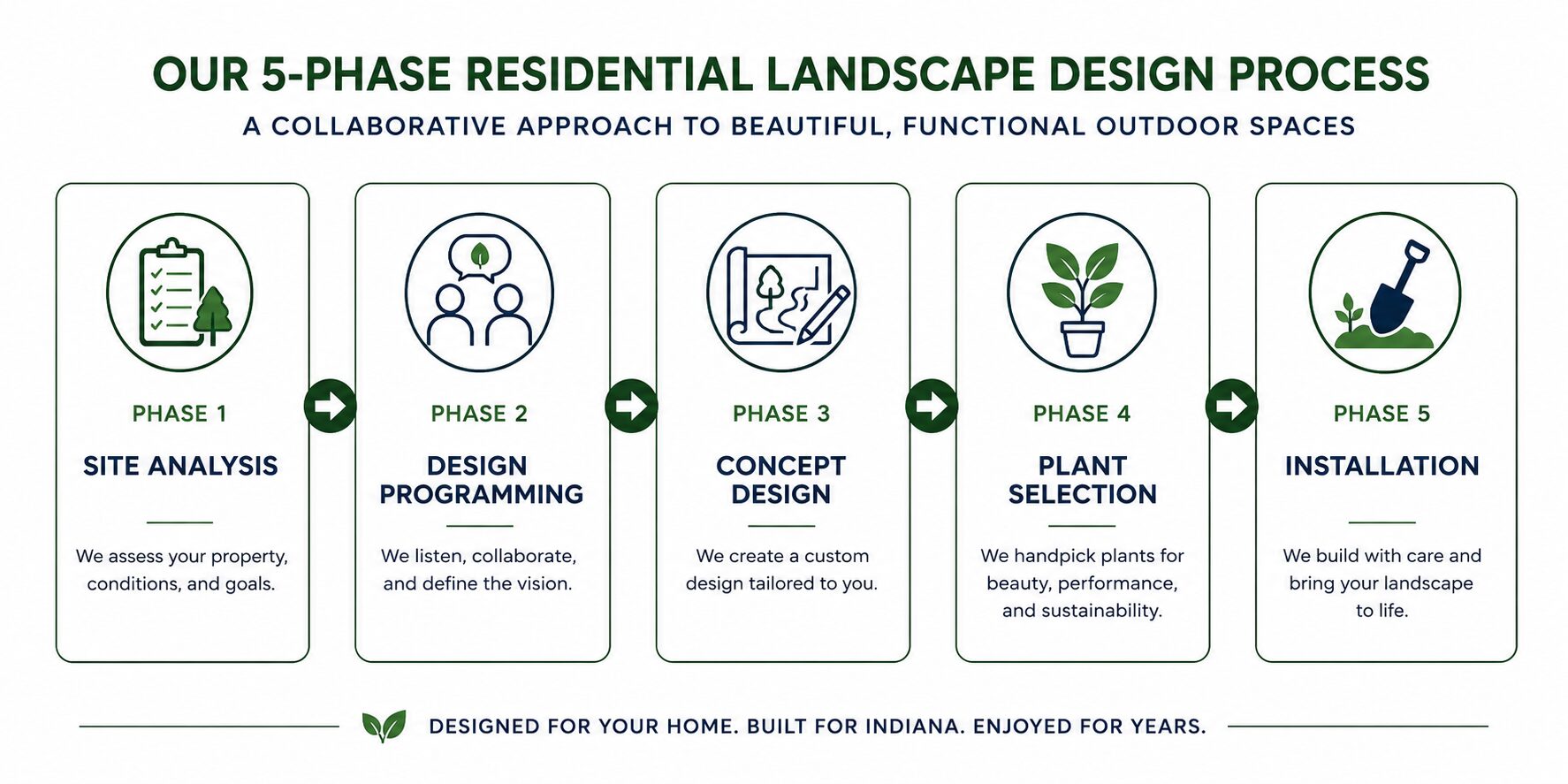
The biggest mistake Hamilton County homeowners make is skipping directly to plant shopping. A landscape that will perform for 10–20 years requires upfront planning that addresses function, flow, and infrastructure before anything goes in the ground. Here's the framework we use on every Hope Grows Indy design project.
1
Site Analysis: Know Your Property Before You Design It
Walk your property and document: sun exposure (mark areas that receive full sun 6+ hours, part shade 3–6 hours, and full shade); drainage patterns (where does water pool after a 2-inch rain?); existing utilities (call 811 before any digging — Indiana law requires it); view lines from primary living spaces; and existing trees with their drip lines marked on a rough sketch.
Pay particular attention to your soil drainage. Dig a 12-inch hole in each planting zone, fill it with water, and time how long it takes to drain. Clay soil should drain 1 inch per hour. If it's taking 4+ hours, you need either raised beds, amended planting holes, or drainage solutions before investing in any plantings.
2
Design Programming: Define How You'll Actually Use the Space
Walk your property and document: sun exposure (mark areas that receive full sun 6+ hours, part shade 3–6 hours, and full shade); drainage patterns (where does water pool after a 2-inch rain?); existing utilities (call 811 before any digging — Indiana law requires it); view lines from primary living spaces; and existing trees with their drip lines marked on a rough sketch.
Pay particular attention to your soil drainage. Dig a 12-inch hole in each planting zone, fill it with water, and time how long it takes to drain. Clay soil should drain 1 inch per hour. If it's taking 4+ hours, you need either raised beds, amended planting holes, or drainage solutions before investing in any plantings.
3
Design Programming: Define How You'll Actually Use the Space
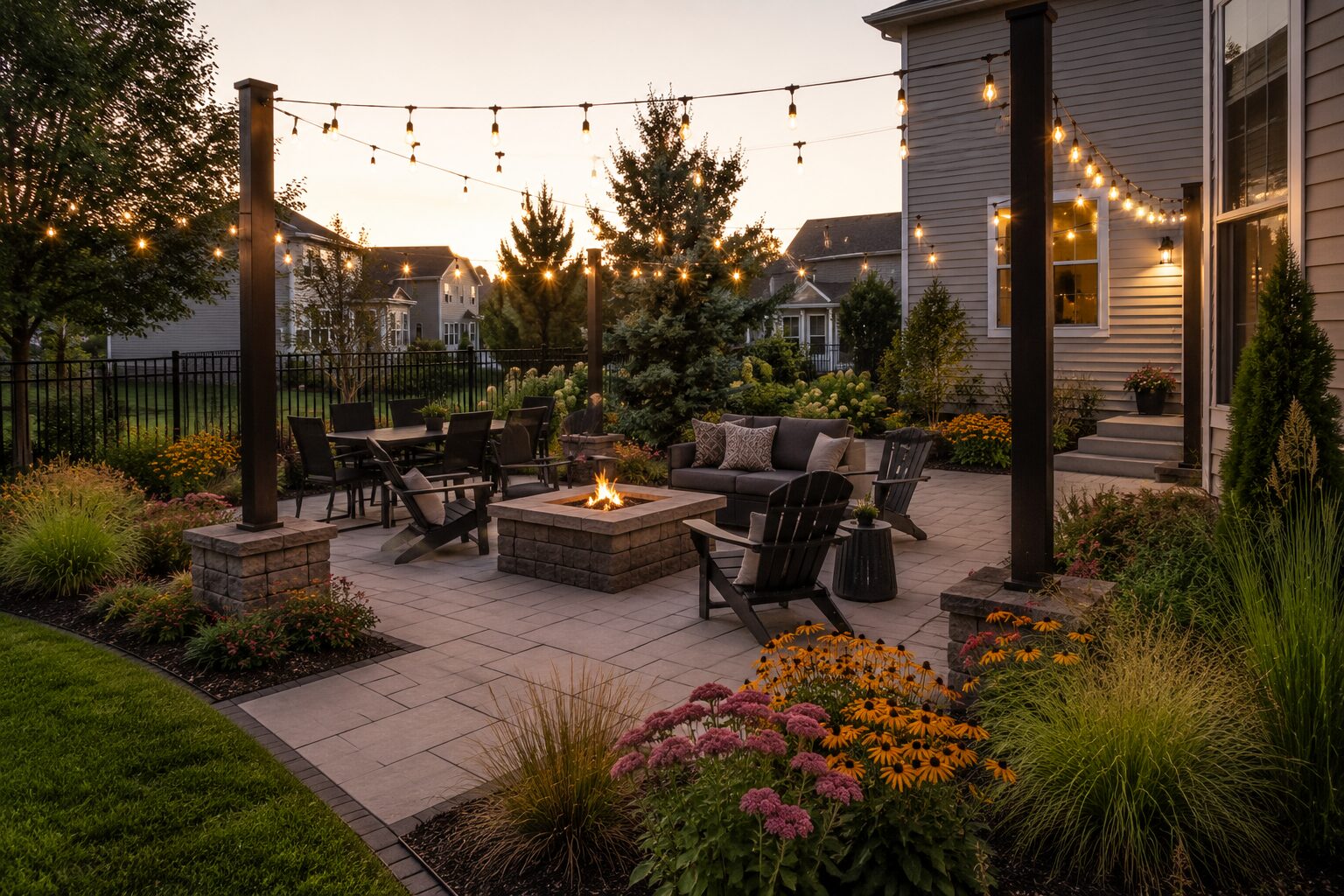
Program every zone before assigning plants to it. Common zones for Hamilton County properties: entry/curb appeal zone (first impression, HOA compliance); entertainment zone (patio, grill area, seating — typically 300–600 sq. ft. for most Hamilton County lots); lawn zone (open turf for kids and pets); privacy zone (screening from neighbors, roads, utilities); kitchen garden or pollinator zone (increasingly popular in Westfield and Noblesville neighborhoods); and play zone if applicable.
Sizing Guidance: Patio Scale for Hamilton County Lots
On a standard Hamilton County lot (approximately 0.25–0.4 acres with a 2,000–3,000 sq. ft. home), a functional outdoor entertaining patio should be at least 12 × 16 feet (192 sq. ft.) to seat 6–8 adults comfortably with furniture. Anything smaller feels cramped and discourages actual use. If your outdoor living goals include a dining table, a seating group, and grill access, plan for 16 × 24 feet (384 sq. ft.) minimum.
For fire pit areas, maintain a clear radius of 10 feet minimum from any structure, fence, or overhanging tree — and check with your municipality (Westfield, Noblesville, Carmel, and Fishers all have varying open-burn ordinances).
4
Concept Design: Beds, Hardscape, and Flow
Once zones are programmed, establish your bed lines. In Hamilton County's predominantly residential neighborhoods, curved beds (using a garden hose to establish flowing lines) read as more naturalistic and low-maintenance than geometric beds. Straight-edged beds work beautifully in formal designs but require more frequent edging maintenance.
First-hand guidance: When laying out bed edges, we use a temporary spray paint line established from a garden hose, then step back and view from the street, from second-floor windows, and from the primary patio. A bed line that looks graceful from the ground can look awkward from elevation. For Hamilton County's two-story homes, always check bed proportions from upstairs before committing to edging.
5
Plant Selection: Right Plant, Right Place
This phase is covered in detail in the next section. The cardinal rule: select plants for mature size, site conditions, and three-season interest — in that order. Impulse buys at a nursery based on current bloom color are the single most common driver of landscape failure in this county.
6
Installation Sequencing
Always install in this order: (1) hardscape first (patios, walks, retaining walls, lighting infrastructure); (2) trees and large shrubs; (3) smaller shrubs and ornamental grasses; (4) perennials and groundcovers; (5) mulch and edging; (6) annuals and seasonal color last.
Reversing this sequence — especially by planting perennials before hardscape installation — results in damaged plants, compacted beds from equipment access, and wasted investment. On Hamilton County installs, we always run irrigation and lighting conduit before any plant material goes in, even if the full system is being phased over multiple seasons.
Plant Selection Guide for Hamilton County Landscapes
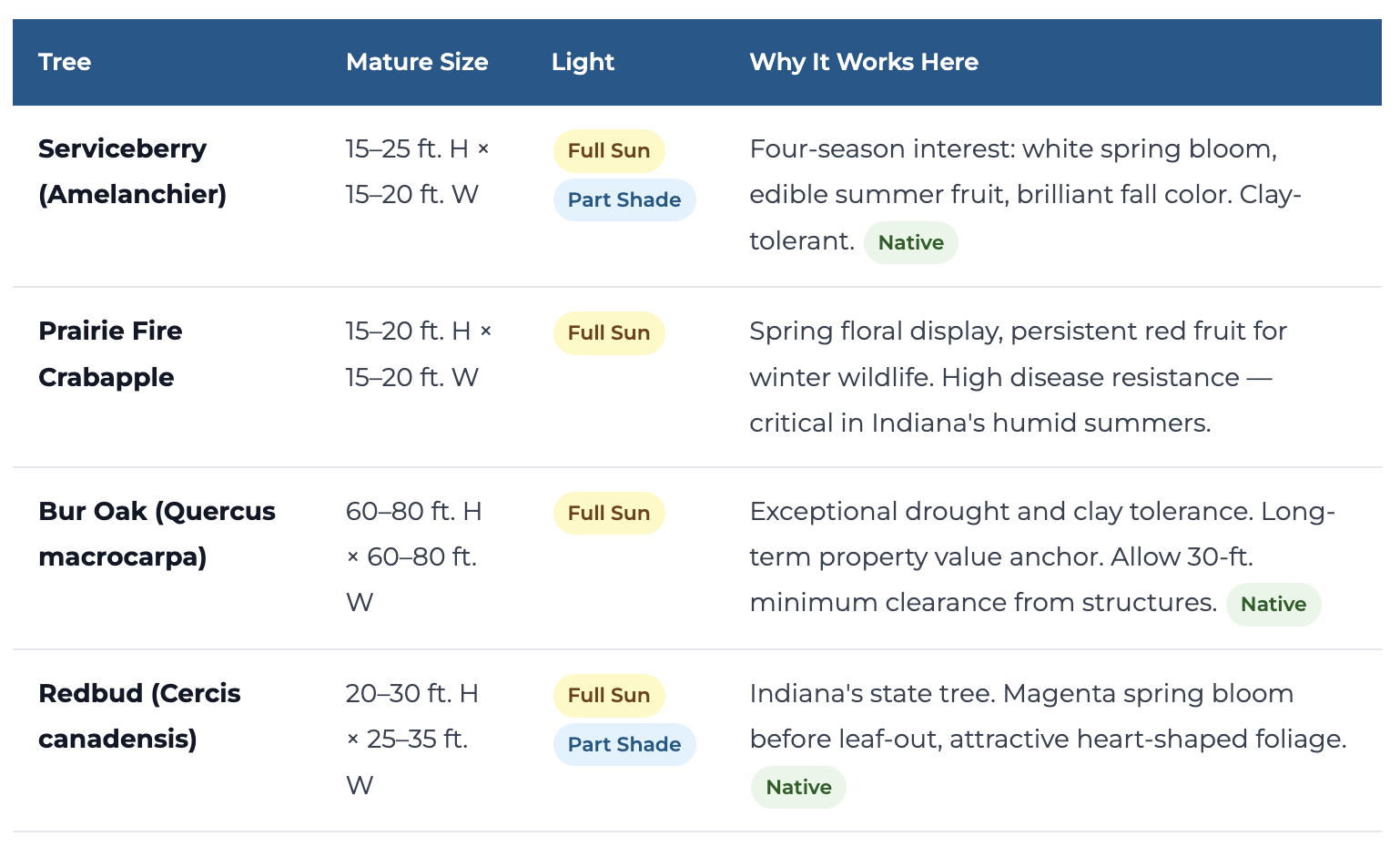
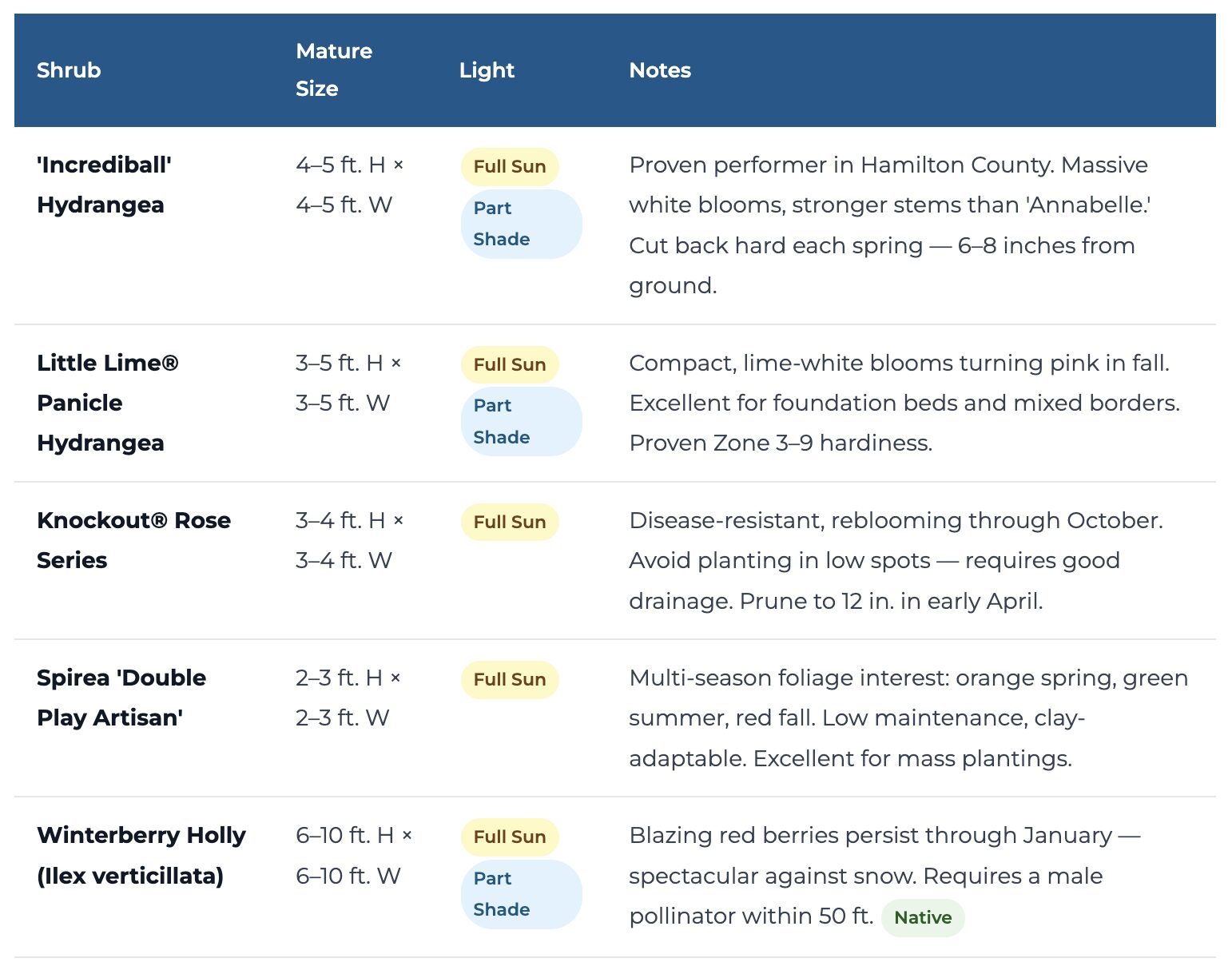
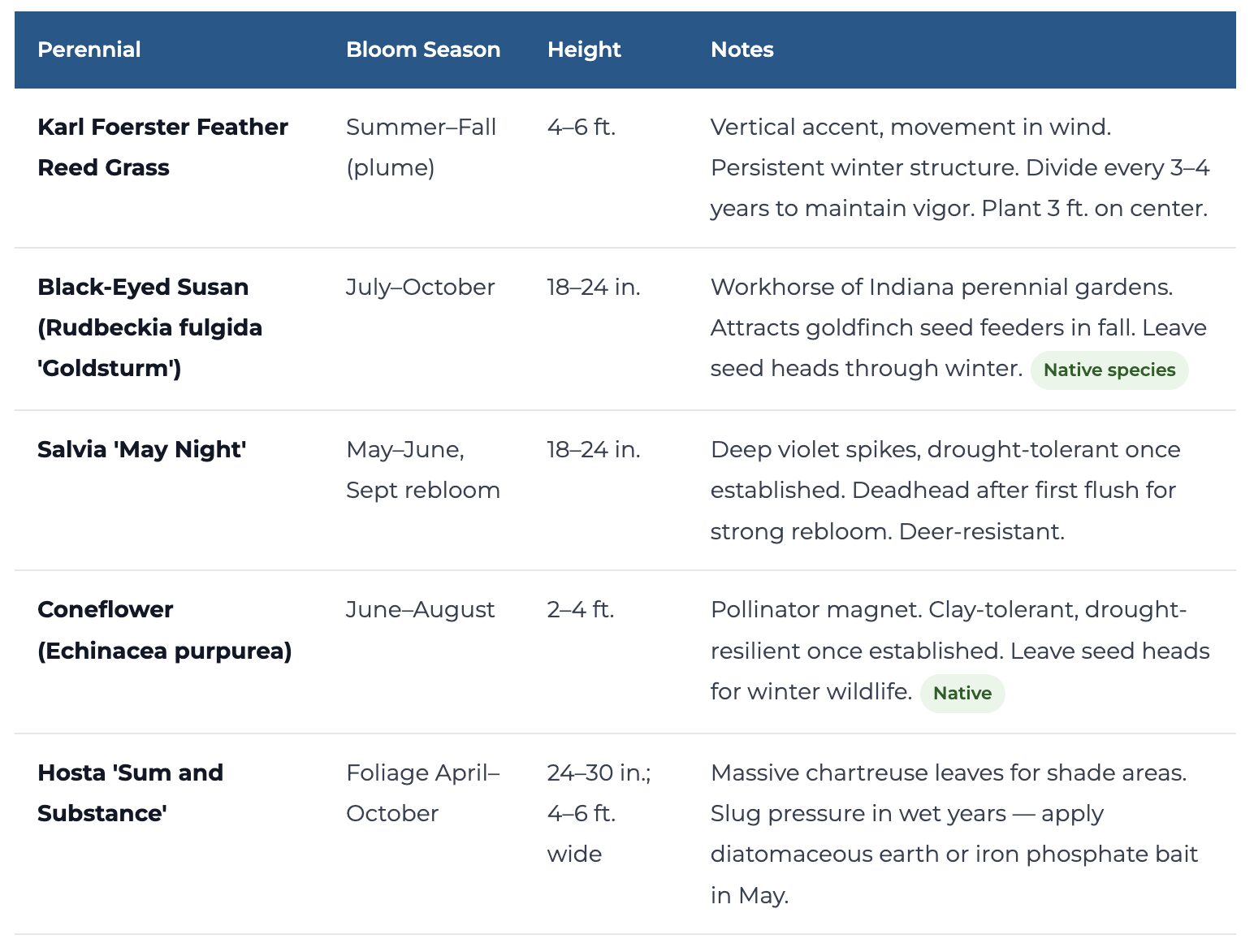
Hamilton County's combination of Zone 6a/6b hardiness, clay soils, and four distinct seasons rewards plants that are adapted to stress. Below are our field-tested recommendations across the major plant categories — with mature sizing, light requirements, and performance notes based on years of local installations.
High-Performing Trees for Hamilton County Residential Landscapes
Foundational Shrubs That Thrive in Hamilton County Clay
Perennials for Three-Season Interest in Indiana Landscapes
Installation Tip — Planting Depth in Clay Soil: In Hamilton County's clay, plant trees and shrubs slightly high — with the root flare 1–2 inches above finished grade. Clay compaction and settling will lower the plant over time, and a buried root flare in clay is a death sentence for woody plants. We see more tree failures from planting too deep than from any other single cause.
Curb Appeal Landscaping in Hamilton County: High-Impact Upgrades by Budget
In Hamilton County's competitive real estate market — where median home values in Carmel and Fishers consistently rank among Indiana's highest — curb appeal landscaping is one of the few home improvements that delivers both immediate enjoyment and measurable appraisal value. Studies from the National Association of Realtors consistently show that well-executed landscaping returns 100–200% of investment in resale context.
Under $2,500: The Foundational Refresh
$2,500–$8,000: The Defined Outdoor Space
$8,000–$25,000+: The Full Outdoor Living Transformation
Ready to Design Your Hamilton County Landscape?
Hope Grows Indy's design team works with homeowners across Westfield, Noblesville, Carmel, and Fishers to create landscapes that perform beautifully for years — not just opening weekend. Let's start with your property.
How to Work With a Hamilton County Landscaping Company (And What to Ask)
Whether you're hiring Hope Grows Indy or evaluating other local providers, the landscape services industry in Hamilton County varies widely in design expertise, installation quality, and long-term support. Here's what separates a professional engagement from a transactional one.
Questions to Ask Before Signing Any Landscape Contract
What Makes Hope Grows Indy Different in Hamilton County
Beyond technical expertise, Hope Grows Indy is built on a workforce reentry mission — giving individuals with employment barriers a skilled trade career path in the landscape industry. When you hire us, your investment does double work: it improves your property and funds meaningful employment in our community.
Our team works year-round across Hamilton County, which means we understand the seasonal rhythm of your landscape — not just the installation day. We offer ongoing seasonal maintenance programs designed to protect your landscaping investment through every transition in Indiana's demanding four-season climate.
Keeping Your Hamilton County Landscape Healthy: Seasonal Maintenance Essentials
A well-designed landscape is not a set-it-and-forget-it investment. Indiana's four distinct seasons each demand specific maintenance actions to keep plantings healthy, hardscape performing, and the overall design reading as intended. Here's the minimum annual maintenance calendar every Hamilton County homeowner should follow.
Spring Landscape Maintenance (March–May)
- Cut back ornamental grasses to 4–6 inches before new growth emerges (before April 1 in Hamilton County)
- Prune summer-blooming shrubs (hydrangeas, spirea) before May 1
- Do not prune spring-blooming shrubs (forsythia, lilac, weigela) in spring — they bloom on old wood; prune immediately after bloom
- Apply pre-emergent crabgrass control to turf zones (see our Indiana lawn fertilization guide for timing)
- Refresh mulch layers to 3 inches — pull away from plant stems and trunk flares
- Divide overcrowded perennials before they break 6 inches of growth
Summer Landscape Maintenance (June–August)
- Deep-water trees and shrubs planted within the last two years during July-August drought — 10–15 gallons per tree per week minimum
- Deadhead spent blooms on roses and salvias to encourage rebloom
- Monitor for Japanese beetle pressure (peak: late June through July in Hamilton County) — handpick or apply targeted treatment; avoid broad-spectrum sprays on pollinator-habitat plantings
- Keep mulch depth at 3 inches — top-dress if it has broken down below 2 inches
Fall Landscape Maintenance (September–November)
- Fall is the best planting season for trees and shrubs in Indiana — cooler temps and natural rainfall reduce transplant stress dramatically
- Leave ornamental grass plumes and coneflower seed heads standing through winter — critical wildlife habitat and winter structure
- Apply winterizer fertilizer to lawn zones (see our Indiana fertilization schedule)
- Wrap newly planted marginally hardy trees (young Japanese maples, crape myrtles) in burlap for their first two winters in Hamilton County
- Drain and winterize irrigation systems before first hard freeze (typically late October in Hamilton County)
Your Hamilton County Landscape Starts With the Right Plan
Exceptional residential landscaping in Hamilton County isn't a product you buy — it's a process you invest in. The homeowners we work with who end up with the most satisfying, highest-performing landscapes are the ones who started with a clear site analysis, programmed their zones around actual family use, selected plants for mature size and three-season performance, and treated the landscape as a living system that rewards consistent seasonal attention.
Whether you're a first-time homeowner in Westfield looking to replace builder-grade shrubs or an established Carmel homeowner ready to tackle a full backyard transformation, the principles in this guide give you the foundation to make smart, lasting decisions — with or without professional help.
When you're ready for a professional partner, Hope Grows Indy is here. Our team combines deep local knowledge of Hamilton County's soils, climate, and neighborhoods with a mission that makes every project mean something beyond the property line.